Modern microscopes are advanced optical and electronic instruments designed to magnify and analyze objects that are too small to be seen with the naked eye. They play a critical role in scientific research, medical diagnostics, industrial inspection, materials science, electronics manufacturing, biotechnology, and education. Unlike traditional microscopes, modern systems integrate digital imaging, automation, and advanced optics to deliver high-resolution, accurate, and reproducible results.
As technology has progressed, microscopes have evolved from simple optical tools into precision analytical systems capable of visualizing cells, nanomaterials, semiconductor structures, and complex biological processes. Their ability to reveal microscopic details supports innovation, quality control, and discovery across multiple industries.
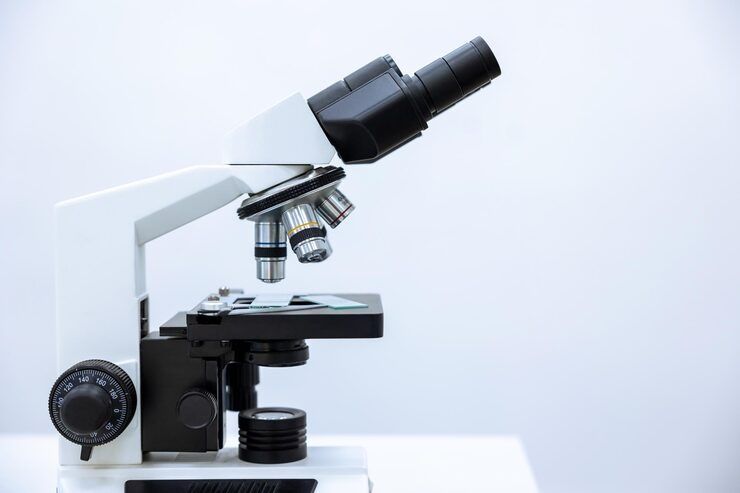
Context: What Modern Microscopes Are and Why They Exist
Modern microscopes exist to overcome the limitations of human vision and conventional inspection methods. Many scientific, medical, and industrial processes require detailed analysis at micro- and nano-scales, where even minor structural variations can significantly impact performance or outcomes.
Microscopes were developed to:
-
Observe biological cells and microorganisms
-
Analyze material structure and surface properties
-
Inspect electronic components and microcircuits
-
Support research, diagnostics, and quality assurance
-
Enable precision measurement and documentation
Over time, advancements in optics, electronics, software, and imaging sensors transformed microscopes into essential tools for both research laboratories and production environments.
Importance: Why Modern Microscopes Matter Today
Modern microscopes are essential due to increasing demand for precision, miniaturization, and quality assurance in science and industry.
Key Reasons Modern Microscopes Are Important:
1. Scientific Discovery
Enable detailed study of biological systems, chemical interactions, and material behavior.
2. Medical Diagnostics
Support pathology, microbiology, and clinical research through accurate visualization.
3. Industrial Quality Control
Detect defects, contamination, and structural flaws during manufacturing.
4. Technological Innovation
Essential for semiconductor, nanotechnology, and advanced materials research.
5. Education & Training
Provide hands-on learning and visual understanding in academic institutions.
Recent Updates: Trends in Modern Microscopy (2024–2025)
Microscopy technology continues to advance rapidly, driven by automation, digitalization, and research needs.
1. AI-Assisted Image Analysis
Artificial intelligence helps identify patterns, classify structures, and reduce manual analysis time.
2. High-Resolution Digital Imaging
Improved sensors enable clearer imaging with enhanced contrast and color accuracy.
3. Automation & Motorized Systems
Automated stage movement and focus control increase precision and repeatability.
4. Integration with Data & Cloud Platforms
Digital microscopes now support data storage, sharing, and remote collaboration.
5. Compact & Portable Microscopes
Smaller systems allow field research and on-site industrial inspection.
5. Non-Destructive Testing Applications
Growing use of microscopy for surface and material analysis without damaging samples.
Laws & Standards Affecting Microscope Use
Microscope use in scientific and industrial settings is guided by quality, safety, and regulatory standards.
Key considerations include:
-
Laboratory safety and equipment handling guidelines
-
Medical and diagnostic compliance standards
-
Industrial quality control regulations
-
Calibration and measurement accuracy requirements
-
Data integrity and documentation practices
Compliance ensures reliable results, user safety, and acceptance in regulated environments.
Types of Modern Microscopes
Modern microscopes are classified based on imaging method, magnification range, and application.
Optical (Light) Microscopes
Use visible light and lenses for magnification.
Applications: Biology, education, basic laboratory research.
Digital Microscopes
Capture images electronically and display them on screens.
Applications: Industrial inspection, documentation, training.
Stereo Microscopes
Provide 3D visualization at low magnification.
Applications: Assembly inspection, electronics, quality control.
Compound Microscopes
Offer high magnification using multiple lenses.
Applications: Cell biology, pathology, microbiology.
Fluorescence Microscopes
Use fluorescent dyes to highlight structures.
Applications: Medical diagnostics, molecular biology.
Electron Microscopes
Use electron beams for ultra-high resolution.
Applications: Nanotechnology, materials science, semiconductor research.
Scanning Electron Microscopes (SEM)
Produce detailed surface images.
Applications: Materials analysis, industrial failure investigation.
Transmission Electron Microscopes (TEM)
Reveal internal structures at atomic scale.
Applications: Advanced research and nanoscience.
Technology Behind Modern Microscopes
Modern microscopes combine multiple technologies for precision imaging.
-
Advanced optical lens systems
-
High-resolution digital sensors
-
Automated focus and stage control
-
Image processing and analysis software
-
AI-based pattern recognition
-
Integrated lighting and contrast enhancement
These technologies improve accuracy, reduce operator dependency, and enhance reproducibility.
Applications of Modern Microscopes Across Industries
Modern microscopes support a wide range of scientific and industrial applications.
Healthcare & Life Sciences
Disease diagnosis, tissue analysis, microbiology, and research.
Pharmaceutical Industry
Drug development, quality control, and contamination detection.
Manufacturing & Industrial Inspection
Surface inspection, defect analysis, and precision measurement.
Electronics & Semiconductors
Microchip inspection, solder joint analysis, and circuit evaluation.
Materials Science
Study of metals, polymers, composites, and nanomaterials.
Education & Research
Teaching, experimentation, and academic studies.
Table: Types of Microscopes and Their Uses
| Microscope Type | Primary Function | Common Applications |
|---|---|---|
| Optical Microscope | General magnification | Biology, education |
| Digital Microscope | Image capture & analysis | Industrial inspection |
| Stereo Microscope | 3D visualization | Assembly, QC |
| Fluorescence Microscope | Cellular imaging | Medical research |
| SEM | Surface analysis | Materials science |
| TEM | Atomic-level imaging | Nanotechnology |
How to Choose the Right Microscope
Define Your Application
Biological, industrial, educational, or research use.
Determine Required Magnification
Higher magnification requires advanced optics or electron microscopy.
Consider Image Documentation Needs
Digital imaging and software integration may be essential.
Evaluate Ease of Use
Automation and ergonomic design improve efficiency.
Check Maintenance & Calibration Requirements
Reliable support ensures long-term performance.
Ensure Compliance
Medical and industrial environments require certified systems.
Frequently Asked Questions
1. What is the difference between optical and electron microscopes?
Optical microscopes use light, while electron microscopes use electron beams for higher resolution.
2. Are digital microscopes replacing traditional microscopes?
Digital microscopes complement traditional systems by improving documentation and analysis.
3. Do microscopes require regular calibration?
Yes, calibration ensures accuracy and reliable measurement.
4. Can microscopes be used in industrial environments?
Yes, industrial microscopes are designed for inspection and quality control.
5. Are modern microscopes difficult to operate?
Automation and user-friendly software have made modern systems easier to use.
Conclusion
Modern microscopes are indispensable tools that enable discovery, quality assurance, and innovation across science and industry. By combining advanced optics, digital imaging, automation, and intelligent analysis, they provide unmatched insight into the microscopic world.
Understanding microscope types, underlying technologies, applications, and selection criteria helps researchers, engineers, and professionals choose systems that meet their specific needs. As scientific and industrial demands continue to evolve, modern microscopy remains at the forefront of precision, reliability, and technological advancement.