Sludge dewatering machines are industrial systems designed to remove excess water from sludge generated during wastewater treatment processes. Sludge is a semi-solid byproduct produced in municipal wastewater treatment plants, industrial effluent treatment facilities, and various manufacturing operations.
As industries and municipalities expanded wastewater treatment infrastructure, managing sludge efficiently became essential. High water content increases disposal volume, transportation challenges, and environmental risks. Sludge dewatering equipment was developed to reduce sludge volume, improve handling efficiency, and meet environmental compliance standards.
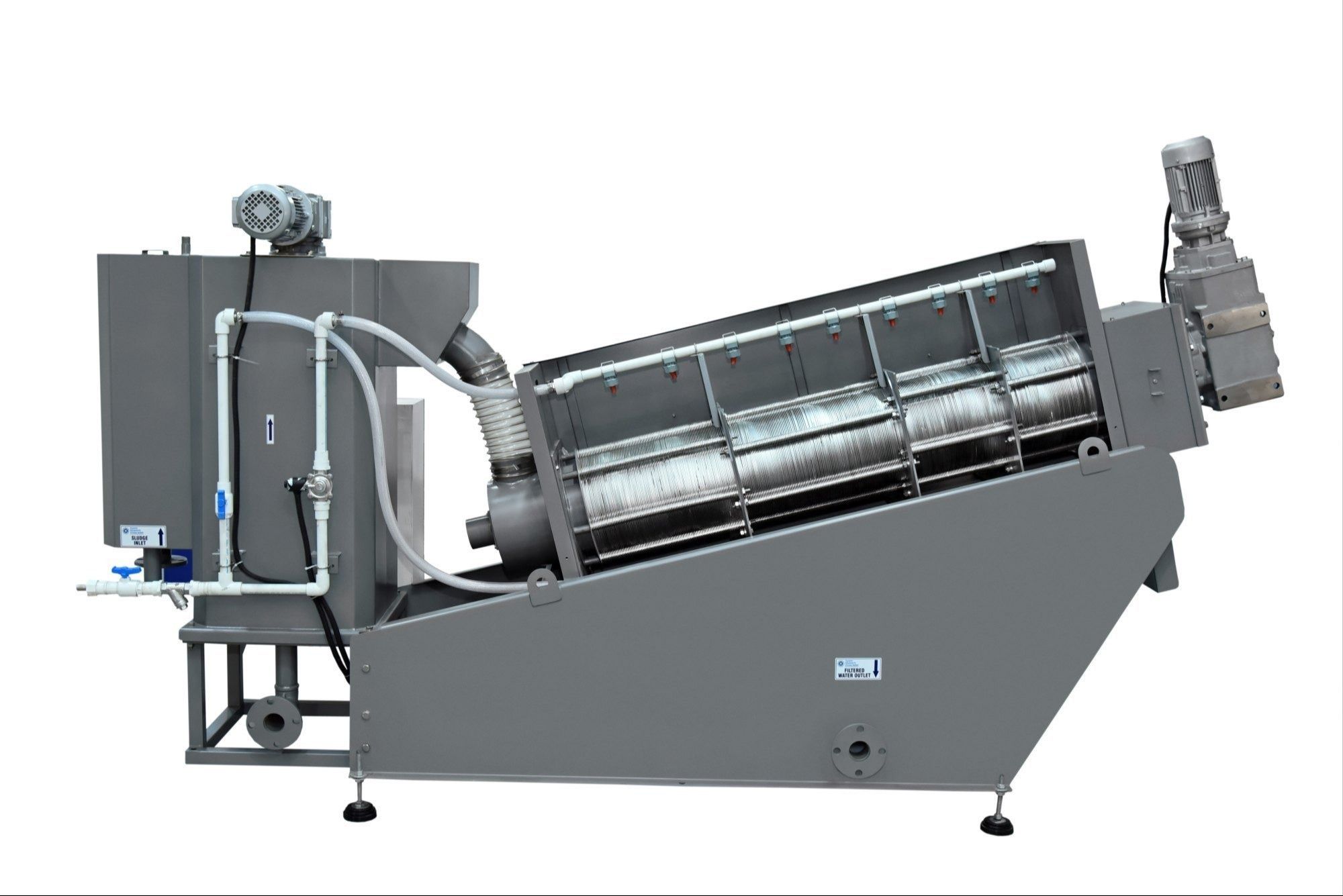
Modern sludge dewatering systems play a critical role in wastewater management, industrial process optimization, and environmental protection.
Importance: Why Sludge Dewatering Machines Matter
Sludge management is one of the most significant operational challenges in wastewater treatment facilities. Dewatering systems help improve sustainability, cost control, and regulatory compliance.
1. Volume Reduction
Removes water content to significantly decrease sludge volume.
2. Improved Waste Handling
Produces a semi-solid “cake” that is easier to transport and manage.
3. Environmental Compliance
Supports regulatory discharge and disposal standards.
4. Cost Optimization
Reduces storage, transportation, and landfill requirements.
5. Enhanced Operational Efficiency
Improves overall wastewater treatment plant performance.
Industries that rely on sludge dewatering machines include municipal wastewater facilities, food processing plants, chemical manufacturing units, pulp and paper mills, and oil refineries.
Working Process of Sludge Dewatering Machines
Sludge dewatering involves mechanical separation of water from solid particles. The process typically follows multiple stages.
1. Sludge Conditioning
Chemical polymers are added to enhance solid-liquid separation.
2. Flocculation
Fine particles bind together to form larger flocs.
3. Mechanical Separation
Pressure, centrifugal force, or filtration removes water from solids.
4. Water Drainage
Separated water is returned to the treatment system.
5. Cake Discharge
Dewatered sludge is discharged in compact form.
6. Monitoring and Control
Automation systems regulate pressure, speed, and flow rates.
Types of Sludge Dewatering Machines
Different industrial applications require different dewatering technologies.
1. Belt Filter Press
Uses continuous belts and pressure rollers to squeeze water from sludge.
2. Centrifuge Dewatering Machine
Applies high-speed centrifugal force for solid-liquid separation.
3. Screw Press (Multi-Disc Press)
Uses rotating screw mechanisms for gradual compression and water extraction.
4. Plate and Frame Filter Press
Applies hydraulic pressure to filter sludge between plates.
5. Rotary Drum Thickener
Concentrates sludge before final dewatering.
6. Vacuum Filter Systems
Use vacuum pressure to extract moisture from sludge layers.
Sludge Dewatering Equipment and Applications
| Equipment Type | Primary Function | Application Area |
|---|---|---|
| Belt Filter Press | Mechanical squeezing | Municipal wastewater plants |
| Centrifuge | High-speed separation | Industrial effluent treatment |
| Screw Press | Continuous compression | Food & beverage industry |
| Filter Press | High-pressure filtration | Chemical processing plants |
| Rotary Drum Thickener | Sludge concentration | Pre-treatment stage |
Industrial Applications of Sludge Dewatering Machines
Sludge dewatering technology is used across various industrial sectors.
1. Municipal Wastewater Treatment
Reduces sludge volume before disposal.
2. Industrial Effluent Treatment Plants (ETP)
Manages sludge from chemical and manufacturing units.
3. Food Processing Industry
Treats organic sludge generated from production processes.
4. Pulp and Paper Mills
Handles fiber-rich sludge efficiently.
5. Oil and Gas Industry
Processes oily sludge and refinery waste.
6. Mining Operations
Manages tailings and slurry waste.
Materials Used in Sludge Dewatering Machines
Durability and corrosion resistance are critical in sludge processing equipment.
1. Stainless Steel 304/316
Resists corrosion in wastewater environments.
2. Carbon Steel with Protective Coatings
Provides structural strength.
3. Polymer Filter Cloth
Used for solid-liquid separation.
4. High-Torque Gear Motors
Enable continuous compression and rotation.
5. Industrial Control Panels
Support automation and monitoring.
Benefits of Sludge Dewatering Machines
Modern sludge dewatering systems offer measurable operational advantages.
1. Reduced Disposal Volume
Minimizes landfill requirements.
2. Lower Transportation Load
Reduces hauling frequency.
3. Improved Environmental Safety
Prevents uncontrolled sludge leakage.
4. Enhanced Plant Efficiency
Optimizes wastewater treatment processes.
5. Resource Recovery Opportunities
Supports potential reuse in agriculture or energy production.
Challenges & Considerations
Proper implementation requires technical planning and compliance awareness.
1. Sludge Composition Variability
Different industries produce different sludge characteristics.
2. Chemical Usage Optimization
Polymer dosing must be carefully controlled.
3. Maintenance Requirements
Filter cloths and moving parts require regular inspection.
4. Energy Consumption
High-speed centrifuges consume significant power.
5. Regulatory Compliance
Disposal standards vary by region and industry.
How to Choose the Right Sludge Dewatering Machine
Selecting the appropriate system depends on operational needs.
1. Analyze Sludge Type
Identify organic, inorganic, or mixed sludge composition.
2. Determine Required Dryness Level
Different applications require different cake solids percentages.
3. Evaluate Throughput Capacity
Match equipment capacity with daily sludge output.
4. Consider Automation Level
Advanced systems include PLC-based control panels.
5. Review Compliance Standards
Ensure alignment with environmental regulations.
Maintenance & Best Practices
Proper maintenance ensures consistent performance.
1. Routine Equipment Cleaning
Prevents clogging and material buildup.
2. Scheduled Polymer Calibration
Ensures effective flocculation.
3. Inspection of Moving Components
Reduces mechanical wear.
4. Regular Monitoring of Cake Solids
Maintains dewatering efficiency.
5. Preventive Maintenance Planning
Improves operational lifespan.
Frequently Asked Questions
What is a sludge dewatering machine?
It is industrial equipment used to remove water from sludge generated during wastewater treatment.
Which industries use sludge dewatering systems?
Municipal wastewater plants, chemical industries, food processing units, mining, and oil refineries.
What is the purpose of sludge conditioning?
It improves solid-liquid separation by forming larger flocs.
Are sludge dewatering machines automated?
Many modern systems include automated monitoring and control features.
How long do sludge dewatering machines last?
With proper maintenance, they typically operate efficiently for 15–20 years.
Conclusion
Sludge dewatering machines are essential components of wastewater and industrial effluent management systems. By reducing sludge volume, improving waste handling, and supporting environmental compliance, these machines enhance operational efficiency and sustainability.
Through advanced mechanical separation technologies such as centrifuges, filter presses, and screw presses, industries can manage sludge responsibly and efficiently. As environmental regulations continue to evolve, sludge dewatering equipment will remain a key element in sustainable wastewater treatment strategies.