In today's world, the ability to rapidly and accurately determine the elemental composition of materials is crucial across industries. From ensuring the safety of consumer products to optimizing mining operations, the need for reliable analytical tools is ever-growing.X-ray Fluorescence (XRF) analyzers are sophisticated instruments that use X-ray fluorescence to identify and quantify the elements present in a sample. When a material is irradiated with high-energy X-rays, its atoms emit secondary X-rays—fluorescent X-rays—with characteristic energies. Measuring these allows for non-destructive, accurate elemental analysis.
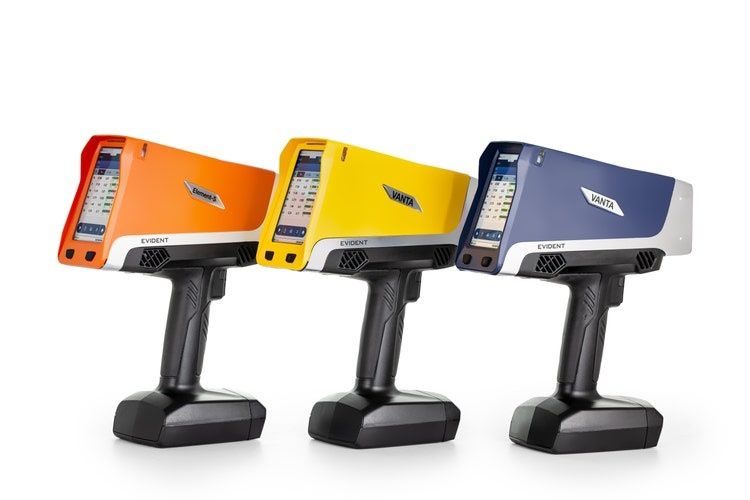
XRF analyzers have evolved into handheld, benchtop, and advanced lab-grade instruments, making them essential tools for industries including environmental monitoring, mining, manufacturing, recycling, and academic research.
Importance: Why XRF Analyzers Matter Today
XRF analyzers are critical because they provide:
-
Rapid, real-time results for faster decision-making
-
Non-destructive testing, preserving valuable samples
-
Versatility, capable of analyzing solids, liquids, powders, and thin films
-
Regulatory compliance, helping industries meet safety standards such as RoHS, REACH, and EPA regulations
Industries and Users Affected:
-
Mining & Exploration: Optimize ore quality and detect valuable minerals
-
Manufacturing & Quality Control: Ensure material composition and avoid defects
-
Environmental Agencies: Monitor soil, water, and air for pollutants
-
Recycling & Waste Management: Efficiently sort metals and alloys
-
Academic & Research Institutions: Accurate elemental characterization for studies
By providing fast, precise, and reliable analysis, XRF analyzers help reduce costs, improve efficiency, and ensure environmental and product safety.
Recent Updates: Trends in 2024–2025
-
Portable Handheld XRF Devices: Enhanced battery life, improved detectors, and wireless connectivity make field analysis more efficient.
-
High-Resolution Laboratory Instruments: Wavelength Dispersive XRF (WDXRF) provides high spectral resolution, enabling trace element detection in complex matrices.
-
Software & Cloud Integration: Data logging, remote analysis, and automated reporting streamline workflows.
-
Hybrid Detection Technology: Combining EDXRF and WDXRF in one system increases flexibility across applications.
-
Eco-Friendly Design: Modern instruments reduce energy consumption and radiation exposure.
-
AI-Powered Analysis: Software algorithms improve accuracy, automate peak identification, and facilitate predictive maintenance.
Types of XRF Analyzers
Handheld XRF Analyzers: Portable and ideal for on-site analysis of metals, soil, and minerals. Quick results make them essential for environmental surveys, scrap metal sorting, and mining exploration.
Benchtop XRF Analyzers: Laboratory instruments offering high precision and sensitivity. Suitable for solids, liquids, and powders in research and quality control. Often equipped with advanced software and automated sample handling.
Wavelength Dispersive XRF (WDXRF): High spectral resolution for accurate detection in complex matrices. Excellent for trace element analysis and laboratory-grade applications.
Energy Dispersive XRF (EDXRF): Fast, cost-effective, and suitable for simple matrices. Ideal for high-throughput industrial applications. Recent improvements in detectors enhance its performance significantly.
Key Features of XRF Analyzers
-
Non-Destructive Testing: Preserve valuable or rare samples.
-
Rapid Results: Analysis in seconds or minutes for real-time decision-making.
-
Versatility: Analyze metals, alloys, minerals, plastics, paints, and liquids.
-
Ease of Use: User-friendly interfaces with minimal sample preparation.
-
Portability: Handheld models allow field analysis without laboratory support.
Applications Across Industries
-
Environmental Monitoring: Detect heavy metals such as lead, mercury, and cadmium in soil, water, and air.
-
Mining & Exploration: Identify mineral composition for optimized ore processing.
-
Manufacturing Quality Control: Verify raw materials, coatings, and product composition.
-
Recycling Industry: Efficiently sort scrap metal and optimize alloy recovery.
-
Food & Consumer Safety: Detect trace contaminants in packaging, soil, and industrial products.
Expert Tips for Choosing the Right XRF Analyzer
-
Define Analytical Needs: Identify sample types, elements of interest, and required precision.
-
Evaluate Instrument Performance: Consider detection limits, resolution, analysis speed, and element range. Tools like XRF Mineral Analyzer help in evaluation.
-
Portability & Ease of Use: Choose handheld devices for fieldwork or benchtop models for laboratory applications.
-
Service & Support: Ensure robust manufacturer support for maintenance, calibration, and spare parts.
-
Compare Prices & Features: Factor in total cost of ownership and instrument capabilities. XRF Analyzer price varies depending on model features and accuracy.
Top-Rated Providers in the XRF Industry
| Manufacturer | Notable Products | Key Strengths |
|---|---|---|
| Thermo Fisher Scientific | Handheld & Benchtop XRF | Precision, versatility, global support |
| Bruker | XRF Mineral Analyzer | High-performance, field & lab applications |
| Oxford Instruments | Spectro Xsort | Fast, on-site analysis, recycling and alloy sorting |
| Hitachi High-Tech | Industrial & Analytical XRF | Durable, accurate, competitive pricing |
Frequently Asked Questions About XRF Analyzers
Q1: What is the difference between handheld and benchtop XRF analyzers?
A1: Handheld devices are portable for fieldwork; benchtop instruments offer higher precision for laboratory use.
Q2: Is XRF analysis destructive?
A2: No, it is non-destructive, preserving the sample.
Q3: What types of samples can XRF analyzers analyze?
A3: Solids, liquids, powders, thin films, metals, minerals, and plastics.
Q4: What is the detection limit of XRF analysis?
A4: Typically in the parts-per-million (ppm) range, depending on the instrument and element.
Q5: What are common applications of XRF analyzers?
A5: Environmental monitoring, mining, manufacturing quality control, recycling, and research.
Conclusion
XRF analyzers have revolutionized material analysis across industries by combining speed, accuracy, and non-destructive testing. From field surveys to laboratory research, these devices provide valuable insights into elemental composition, enabling smarter decisions, improved efficiency, and compliance with global regulations.
With the latest advancements in portable devices, software integration, AI-powered analysis, and high-resolution detection, XRF technology continues to expand its role in mining, manufacturing, environmental monitoring, and recycling. By understanding the types, features, and expert tips for selection, businesses and researchers can maximize the benefits of XRF analysis in 2025 and beyond.