Solar panel manufacturing plant setup involves establishing an industrial facility designed to produce photovoltaic (PV) modules used for generating solar electricity. These plants integrate semiconductor processing, automated assembly lines, quality testing systems, and material handling infrastructure to manufacture reliable solar panels at scale.
With the global transition toward renewable energy and increasing adoption of solar power systems, manufacturing facilities play a critical role in meeting energy demands. A structured solar panel production plant includes raw material handling, wafer processing, cell manufacturing, module assembly, testing, and packaging units.
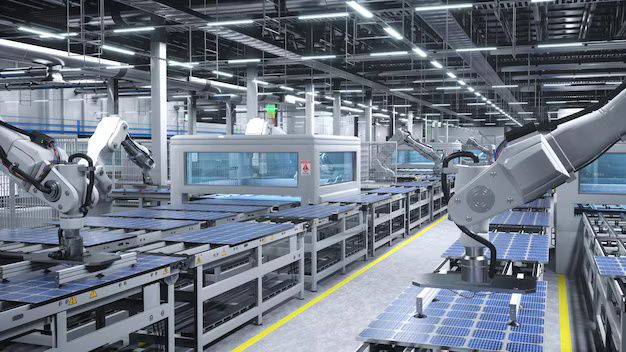
Modern photovoltaic manufacturing plants rely on automation, precision engineering, and strict quality control to ensure high conversion efficiency and long-term panel durability.
Importance: Why Solar Panel Manufacturing Plant Setup Matters
Solar module production facilities are essential for supporting sustainable energy expansion and energy security.
1. Renewable Energy Growth
Supports increasing demand for clean electricity generation.
2. Energy Independence
Reduces reliance on imported fossil fuels.
3. Industrial Development
Encourages growth in renewable energy infrastructure sectors.
4. Employment Generation
Creates skilled technical and engineering roles.
5. Technological Advancement
Drives innovation in photovoltaic efficiency and materials science.
Solar panel manufacturing plants contribute significantly to national clean energy strategies and carbon reduction initiatives.
Solar Panel Production Process
The photovoltaic manufacturing process is structured into multiple coordinated stages.
1. Silicon Ingot Production
High-purity silicon is melted and cast into cylindrical or rectangular ingots.
2. Wafer Slicing
Precision wire saws cut ingots into thin silicon wafers.
3. Cell Processing
Wafers undergo doping, diffusion, and anti-reflective coating treatments.
4. Metallization
Conductive silver or aluminum contacts are screen-printed on cells.
5. Cell Testing and Sorting
Cells are evaluated based on electrical output performance.
6. Cell Stringing and Interconnection
Multiple cells are electrically connected in series.
7. Module Lamination
Cells are encapsulated between tempered glass and backsheet using EVA sheets.
8. Framing and Junction Box Installation
Aluminum frames and electrical connectors are attached.
9. Final Inspection and Flash Testing
Panels are tested under simulated sunlight for power rating verification.
10. Packaging and Dispatch
Finished modules are packed for transportation and installation.
Complete Equipment Required for Solar Panel Manufacturing
A fully operational solar panel plant requires specialized photovoltaic production machinery.
1. Ingot Casting Furnace
Produces high-purity silicon blocks.
2. Wire Saw Cutting Machine
Slices ingots into uniform wafers.
3. Diffusion Furnace
Creates semiconductor layers in solar cells.
4. PECVD Coating System
Applies anti-reflective coatings.
5. Screen Printing Machine
Prints conductive metal grids.
6. Cell Stringing Machine
Interconnects solar cells precisely.
7. Layup and Framing System
Assembles module structure.
8. Laminator Machine
Seals modules under controlled temperature and pressure.
9. Electroluminescence (EL) Tester
Detects micro-cracks and defects.
10. Flash Testing Equipment
Measures electrical performance output.
11. Automated Material Handling Systems
Ensures efficient movement of components.
Solar Panel Manufacturing Equipment and Functions
| Equipment | Primary Function | Production Stage |
|---|---|---|
| Ingot Furnace | Silicon casting | Raw material stage |
| Wire Saw | Wafer slicing | Wafer processing |
| Diffusion Furnace | Doping process | Cell formation |
| Laminator | Module sealing | Assembly stage |
| Flash Tester | Power verification | Quality control |
Infrastructure Requirements for Plant Setup
Establishing a solar module manufacturing plant involves infrastructure planning.
1. Production Floor Layout
Optimized workflow design for efficiency.
2. Cleanroom Areas
Required for wafer and cell processing stages.
3. Power Supply Systems
Stable and high-capacity electrical connections.
4. Water Treatment Units
Purified water for cleaning and chemical processes.
5. Compressed Air Systems
Supports automation equipment.
6. Storage and Warehousing
Raw material and finished goods storage.
Materials Used in Solar Panel Manufacturing
Material quality directly affects panel efficiency and lifespan.
1. Monocrystalline or Polycrystalline Silicon
Primary semiconductor material.
2. Tempered Solar Glass
Provides durability and transparency.
3. EVA (Ethylene Vinyl Acetate)
Encapsulates and protects cells.
4. Aluminum Frames
Add structural stability.
5. Backsheet Materials
Provide insulation and environmental protection.
Benefits of Establishing a Solar Panel Manufacturing Plant
A well-designed facility offers multiple strategic advantages.
1. High Production Efficiency
Automated systems improve throughput.
2. Consistent Product Quality
Integrated testing ensures compliance.
3. Scalable Capacity
Facilities can expand production lines.
4. Renewable Energy Contribution
Supports clean power infrastructure.
5. Long-Term Industrial Growth
Encourages sustainable manufacturing ecosystems.
Challenges & Considerations
Solar panel manufacturing requires careful planning and precision engineering.
1. High Initial Infrastructure Investment
Advanced machinery and cleanroom setup required.
2. Energy-Intensive Silicon Processing
Ingot production consumes significant power.
3. Quality Control Complexity
Micro-cracks can affect panel performance.
4. Rapid Technology Evolution
Emerging technologies such as TOPCon and HJT cells require upgrades.
5. Compliance with International Standards
Panels must meet global certification requirements.
Maintenance & Best Practices
Consistent operational monitoring ensures reliable output.
1. Equipment Calibration
Maintains process precision.
2. Cleanroom Monitoring
Controls contamination risks.
3. Regular EL Testing
Detects structural defects early.
4. Preventive Maintenance Scheduling
Reduces downtime.
5. Data-Driven Production Monitoring
Improves efficiency through analytics.
Frequently Asked Questions
What is required to set up a solar panel manufacturing plant?
It requires semiconductor processing equipment, module assembly lines, quality testing systems, and supporting infrastructure.
What are the main stages of solar panel production?
Ingot casting, wafer slicing, cell processing, module assembly, and performance testing.
Is automation necessary in solar panel manufacturing?
Modern facilities rely heavily on automated systems for precision and scalability.
How are solar panels tested for performance?
Flash testers simulate sunlight to measure power output.
How long does solar manufacturing equipment last?
With proper maintenance, production machinery can operate effectively for 15–25 years.
Conclusion
Solar panel manufacturing plant setup involves advanced engineering, semiconductor processing technology, and automated module assembly systems. From silicon ingot casting to final flash testing, each production stage requires precision equipment and strict quality control.
As global demand for renewable energy continues to expand, photovoltaic manufacturing facilities remain essential for delivering efficient and durable solar power solutions. Structured planning, modern equipment integration, and consistent maintenance ensure long-term operational success in the solar energy manufacturing sector.